PersonalHour Research & Development Centre
A research-based guide to how home reformer Pilates may support pain relief, posture, balance, flexibility, muscular endurance, mental well-being, and long-term healthy movement.
Summary
Current evidence supports Pilates as a meaningful health-promoting exercise method. The strongest evidence is not from home-reformer trials alone, but from reformer-specific trials, apparatus-based studies, and larger Pilates meta-analyses.
The most consistent benefits are pain reduction, balance, flexibility, functional performance, posture-related outcomes, muscular endurance, strength, and movement confidence. Smaller but promising benefits may include blood pressure support, body composition changes, glycemic control in people with diabetes, and mental-health outcomes such as anxiety, depression, fatigue, and energy.
Pain Reduction
Pilates shows strong evidence for chronic low back pain and musculoskeletal discomfort support.
Posture
Reformer Pilates can support spinal alignment, body awareness, and posture correction.
Balance
Controlled spring resistance and carriage movement may improve stability and coordination.
Flexibility
Pilates combines mobility with strength, helping the body move through safer ranges.
Strength
Low-impact resistance helps build muscular endurance, core support, and full-body control.
Mental Wellness
Mindful movement and breathing may support anxiety, fatigue, energy, and mood outcomes.
Important Research Note
The evidence does not show that owning a reformer is automatically better than mat Pilates, walking, resistance training, or other structured exercise for every person. The main value appears to come from consistent, progressive, well-guided movement.
A home reformer may be justified when the user values low-impact resisted movement, guided progression, posture work, balance training, or finds the apparatus engaging enough to improve long-term consistency.
Why a Home Reformer Can Help
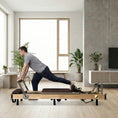
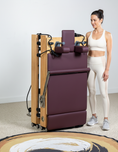
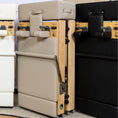
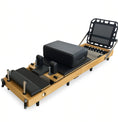
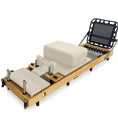
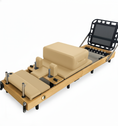
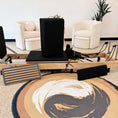
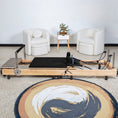
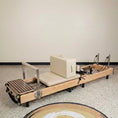
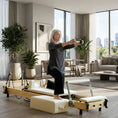
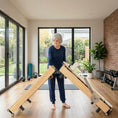
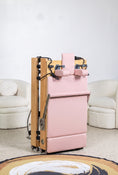
A Pilates reformer uses a spring-resisted carriage, footbar, straps, and adjustable resistance. This allows movement to be assisted when needed or made more challenging as strength improves. For home users, this creates a flexible way to practice low-impact strength, mobility, balance, and posture work.
How Reformer Pilates May Support the Body
- Improves controlled force production and deceleration
- Builds trunk, hip, and shoulder stability
- Supports proprioception and balance
- Encourages breathing, concentration, and controlled tempo
- Allows scalable resistance for different fitness levels
- Provides supported positions such as lying, seated, kneeling, and side-lying work
Evidence Summary by Benefit Area
| Health Area | Research Signal | Meaning for Home Reformer Users |
|---|---|---|
| Chronic Low Back Pain | Strong evidence from Pilates meta-analyses | Likely one of the best-supported benefit areas |
| Balance & Function | Positive effects in older adults and broader Pilates research | Useful for low-impact stability and coordination training |
| Posture | Reformer studies show posture-related improvements | Good fit for desk workers and people focused on alignment |
| Strength & Endurance | Positive findings for muscular endurance and functional strength | Helpful for full-body conditioning without high impact |
| Body Composition | Promising but modest; stronger with longer programs and diet support | Best combined with nutrition and aerobic activity |
| Mental Health | Research links Pilates with improvements in anxiety, depression, fatigue, and energy | May support stress relief and body confidence |
| Cardiometabolic Health | Modest support for blood pressure, fitness, and diabetes-related markers | Useful as an adjunct, not a full replacement for aerobic exercise |
Key Reformer and Apparatus Studies
| Study | Population | Program | Main Findings |
|---|---|---|---|
| Yılmaz et al., 2022 | 40 sedentary medical interns | Reformer vs control, 9 weeks, 2 sessions/week | Improved performance tests and HDL marker; body composition not clearly superior |
| Bulguroğlu et al., 2017 | People with multiple sclerosis | Reformer vs mat vs home control, 8 weeks | Both Pilates groups improved balance, mobility, core stability, fatigue, and quality of life |
| Caglayan et al., 2023 | Women with fibromyalgia | Reformer vs home mat Pilates, 6 weeks | Both approaches improved outcomes; reformer was not clearly superior |
| Şahan et al., 2025 | Women with chronic neck or low back pain | Reformer vs no exercise, 6 weeks | Improved pain, pain interference, fear of movement, fatigue, and sleep quality |
| Gökalp et al., 2025 | Women with overweight or obesity | Reformer vs control, 8 weeks, 3 sessions/week | Improved body composition, strength, endurance, depression, and anxiety |
| Taştan et al., 2025 | Desk-based office workers | 8-week reformer program | Improved posture, body appreciation, and social-appearance anxiety |
Recommended Home Reformer Protocol
| User Stage | Frequency | Session Length | Practical Focus | Progression Rule |
|---|---|---|---|---|
| Beginner | 2 non-consecutive days/week | 30–40 minutes | Footwork, pelvic curl, gentle arm work, leg straps, breathing, posture | Increase only after 1–2 symptom-free weeks |
| Early Progression | 2–3 days/week | 40–50 minutes | Unilateral patterns, glute work, anti-rotation, light balance challenges | Progress one variable at a time |
| Established Routine | 3 days/week | 45–60 minutes | Full-body strength, mobility, posture, balance, and recovery work | Keep one easier technique day weekly |
| Pain-Sensitive Users | 2 days/week | About 45 minutes | Low-irritability movement, spinal control, hip strength, graded exposure | Advance only if symptoms settle within 24 hours |
| Weight or Metabolic Goals | 3 days/week | 45–60 minutes | Reformer plus walking or aerobic work and nutrition support | Do not rely on reformer alone for full aerobic-dose goals |
Safety and Contraindications
Pilates is generally low impact, but home reformer use still requires safe setup, correct spring selection, careful transitions, and gradual progression.
- Beginners should receive initial professional instruction when possible.
- People with acute trauma, severe uncontrolled pain, new neurologic symptoms, recent surgery, or uncontrolled cardiovascular disease should consult a clinician first.
- People with osteoporosis may need Pilates modifications and should avoid back-straining positions.
- Older adults or fall-risk users should begin with supported lying or seated exercises.
- Reformer Pilates should be part of a broader activity routine, especially when cardiovascular health is a goal.
Home Adoption and Market Signals
Public data does not clearly separate home reformer ownership from general Pilates participation. However, industry signals show strong consumer demand for Pilates.
- SFIA and Physical Activity Council data show broad fitness participation growth.
- ClassPass reported more than 27 million Pilates searches and over 15 million Pilates reservations in 2025.
- Commercial market reports project continued Pilates equipment growth, although forecasts vary.
- Vendors are increasingly marketing reformers for home users, financing, rental options, and on-demand class ecosystems.
Limitations of the Evidence
- Home-reformer-specific research is still limited.
- Most reformer trials are short, usually 6 to 8 weeks.
- Many studies are supervised, not fully unsupervised at-home programs.
- Reformer Pilates does not always outperform mat Pilates or other exercise methods.
- Long-term adherence, safety reporting, and cost-effectiveness need more research.
- Public market data does not precisely track home reformer shipments or installations.
Practical Consumer Conclusion
Home reformer Pilates can deliver real consumer health benefits when used correctly and consistently. The strongest support is for pain relief, posture, balance, flexibility, muscular endurance, and mental well-being. The best results are most likely when users receive onboarding, follow a structured program for at least 6 to 12 weeks, and combine reformer work with a broader wellness routine.
Research Resources
Pilates for chronic low back pain — PubMed Pilates compared with other exercise modalities — PubMed SFIA Topline Participation Report Physical Activity Council Methodology All About Reformer Pilates Pilates, balance, strength, flexibility, and function — PubMed Mat Pilates and Reformer Pilates in multiple sclerosis — PubMed Reformer Pilates in fibromyalgia — PubMed Pilates and cardiorespiratory fitness Pilates and mental health outcomes Online home-based Pilates and obesity-related outcomes ClassPass 2025 Look Back Report NHS Pilates for Beginners Pilates and hypertension — Journal of Human Hypertension Pilates-based exercise and supervised training — PubMed Pilates and balance meta-analysis — PubMed Pilates and body composition — Frontiers in Physiology Pilates and diabetes-related metabolic control — Frontiers in Physiology U.S. Physical Activity Guidelines